Please call 1-800-794-1989 or use the SmartHub mobile app. To talk to a person, press zero.

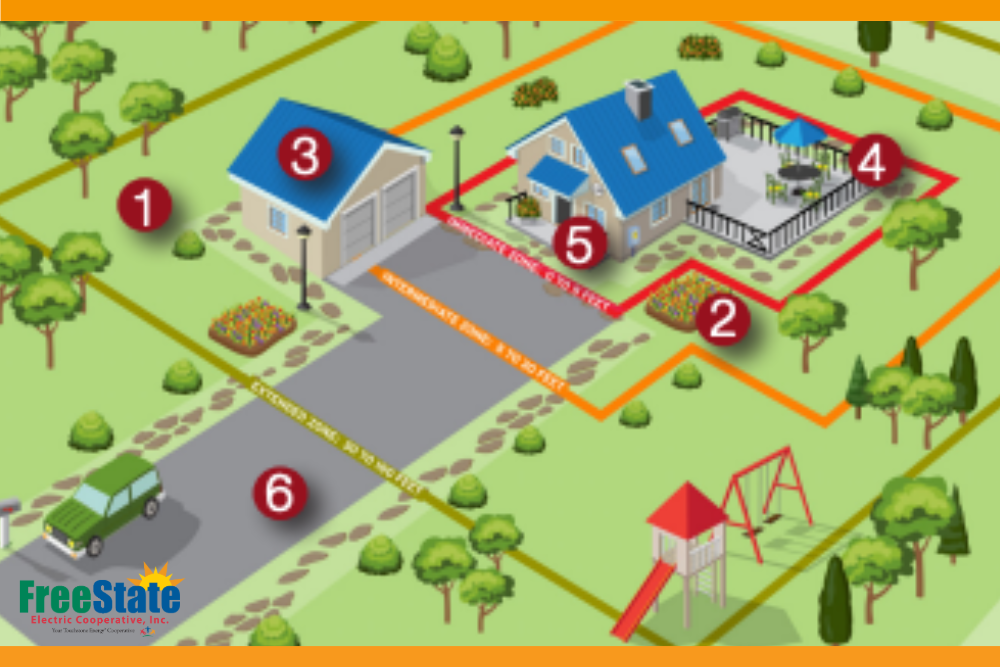
The most important area to focus on is your Home Ignition Zone — your house and its 200-foot perimeter. Think of it in three layers: closest, middle and outer. Let’s walk through what to do in each.
The Immediate Zone (0-5 feet from your home)
This is the most important zone. Start here. Your goal: create a clean, non-combustible buffer.
- Clear leaves, pine needles, and debris from roofs and gutters.
- Repair missing or loose shingles and roof tiles.
- Screen vents with 1/8-inch metal mesh to block embers.
- Repair damaged window screens and replace broken windows.
- Remove mulch, firewood, plants, leaves and anything that can burn from around the house.
- Don’t store anything under decks or porches; screen openings to prevent debris buildup.
- Keep the 5 feet closest to buildings, structures, and decks clear of flammable materials. Swap mulch for gravel or crushed stone.
The Intermediate Zone (5-30 feet)
This is your landscaping safety zone. The goal is to slow and reduce fire.
- Keep grass trimmed to 4 inches or shorter.
- Trim limbs off tree trunks to at least 10 feet above the ground.
- Space tree canopies at least 18 feet apart (more if on a slope).
- Make sure mature trees are 10-20 feet away from the home.
- Remove shrubs and low branches below trees to prevent fire from climbing.
- Clear plants and grass around propane tanks.
- Create fuel breaks with walkways, gravel paths, patios or driveways.
The Extended Zone (30-200 feet)
The goal here is to interrupt the fire’s path and keep flames small and on the ground.
- Remove piles of leaves, fallen branches and dead plants.
- Remove small conifer trees growing between larger mature trees.
- Clear vegetation around sheds and outbuildings.
- Leave at least 12 feet between canopy tops for trees 30 to 60 feet from the home.*
- Leave at least 6 feet between canopy tops for trees 60 to 100 feet from the home.*
Access and emergency prep
When every minute counts, make it easy to get help.
- Clearly mark your home address with numbers visible from the road.
- Know two ways out of your neighborhood.
- Have a predetermined meeting place.
- Make a wildfire evacuation plan; include your pets and livestock.
- Leave early if you feel unsafe — don’t wait to be told.
You don’t need to fireproof your entire property to make a difference. The small details closest to your home could determine whether it withstands a wildfire. One weekend of cleanup and some thoughtful upgrades can dramatically shift the odds in your favor and bring peace of mind for seasons to come.
Home hardening checklist
Small upgrades can make a big difference when embers fly.
Roof and vents:
- Choose a Class A fire-rated roof (e.g., metal, composite shingles, tile or concrete).
- Cover attic and roof vents with 1/8-inch metal mesh.
Siding and windows:
- Use fire-resistant materials like brick, fiber-cement, stucco or treated wood.
- Install dual-pane tempered glass windows to resist cracking from heat.
*Distances suggested are based on National Fire Protection Association (NFPA) guidelines. However, the spacing required could be significantly greater due to slope, tree species and other site-specific conditions.
Sources: National Fire Protection Association (NFPA), Smokeybear.com
This content was included in the June 2026 Kansas Country Living magazine centerspread for FreeState Electric.